Dodge Charger Review 2026: The New Muscle Formula

from the experts at Invoice Pricing

Cars Dodge Dodge Charger Review 2026: The New Muscle Formula
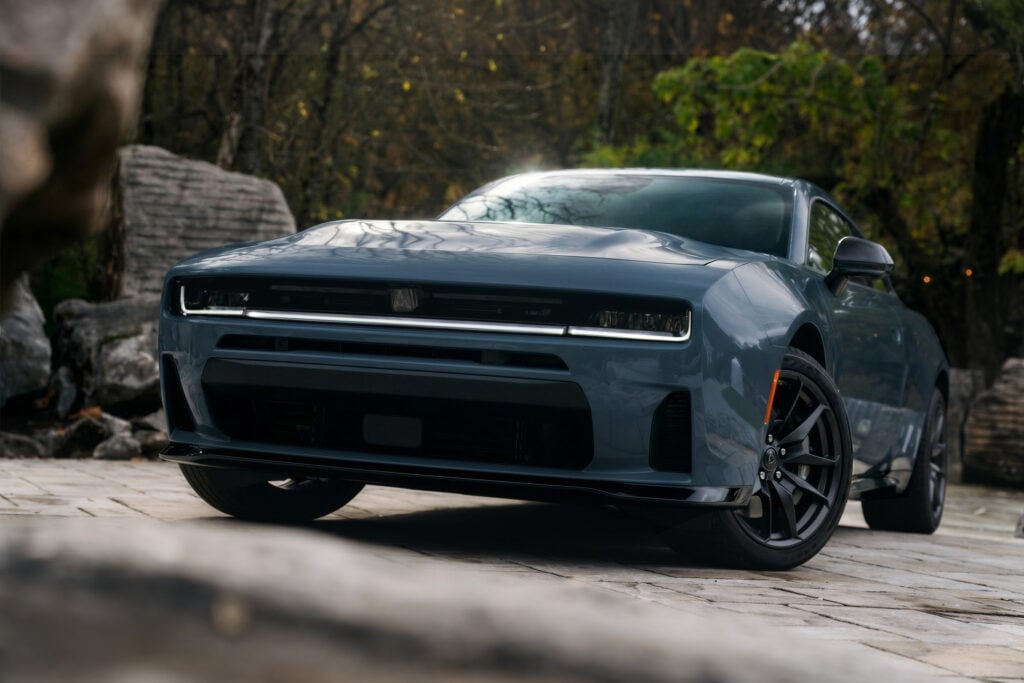
Gray Dodge Charger shown from a low front three-quarter angle on a stone driveway for a Dodge Charger Review.

2026

Dodge

Charger

In this Dodge Charger Review, we are looking at a car that no longer fits neatly into the old muscle-car box. The 2026 Dodge Charger sold in the U.S. is bigger, more versatile, and more ambitious than the last one, with both gas-powered Sixpack models and electric Daytona versions, plus two-door and four-door body styles. That sounds like a lot, because it is. But the basic idea still holds: the 2026 Dodge Charger is built for people who want something loud in personality, strong in a straight line, and far less ordinary than most performance cars on sale today.

What’s New

For 2026, the biggest story is expansion. The Charger is no longer just the new electric Daytona story. Dodge brings in gas-powered Sixpack R/T and Scat Pack models, and the four-door gas cars also join the lineup, which makes the range much broader than before.
That means 2026 is not really about reinventing the Charger again. It is about finally giving buyers more than one path into the new-generation car. Gas or electric, two doors or four, entry-level muscle or higher-output excess, the Charger now covers more territory than it used to.

Infotainment and Connectivity

Dodge builds the cabin around Uconnect 5 and a large central touchscreen, with connected services, performance displays, and the kind of configurable drive-tech menus you now expect in a modern performance car. It still looks like a Dodge, but no longer in a dated way.
The bigger change is that the interior now feels designed for living. There is more usable tech, more on-demand performance data, and a much stronger sense that Dodge knows buyers spending this kind of money expect more than raw horsepower and a good exhaust note.

Price and How to Choose

The 2026 Dodge Charger starts at $49,995 for the two-door R/T. From there, pricing moves to $54,995 for the two-door Scat Pack, and the electric Daytona Scat Pack starts around $59,995. Plus trims push those numbers higher, and four-door versions add more money.
The smartest buy looks like the R/T. It feels like the trim where the new Charger’s whole argument comes together: strong power, standard all-wheel drive, usable space, and a price that is still high but not immediately absurd. The Scat Pack is the wilder option, and probably the one enthusiasts will talk about more, but the R/T is easier to defend if you want the Charger’s character without committing fully to its most excessive version.
The new Charger feels less like a pure throwback and more like Dodge trying to build one car that can do several jobs at once. It is still supposed to feel bold and aggressive, but now it also has to be practical enough to live with every day. That shift shows up most clearly in the gas lineup, which now uses Dodge’s twin-turbocharged 3.0-liter Hurricane inline-six instead of the old V-8 formula. The R/T makes 420 horsepower, while the Scat Pack jumps to 550 horsepower and 531 lb-ft of torque. Both come with an eight-speed automatic, standard all-wheel drive, and the ability to send power fully to the rear when you want a more traditional muscle-car feel.
On paper, the Scat Pack is the headline version, and Dodge says it can hit 60 mph in 3.9 seconds. But the more interesting trim may actually be the R/T, because that is the one most buyers can realistically justify. It still has real power, still looks the part, and still gives you the new Charger’s broader mix of speed and usability without pushing as deep into excess. The electric Daytona Scat Pack sits above both, with up to 670 horsepower, making it the quickest of the group, but the gas Sixpack models feel most connected to what many buyers still expect a Charger to be.
Fuel economy depends entirely on which Charger you are talking about. The gas-powered Scat Pack is currently listed at 16 mpg city, 23 mpg highway, and 19 mpg combined. The electric Daytona Scat Pack delivers 93 MPGe in the city, 79 MPGe on the highway, and 86 MPGe combined, with an EPA range of 267 miles. EPA figures for the gas R/T are not yet broadly published on the main public listings, so that version is still a little less settled from a hard-numbers standpoint.
In real terms, none of these versions is really about efficiency first. The gas cars are performance cars that happen to be more usable than you might expect, and the EV trades fuel stops for charging stops while giving you a much stronger off-the-line punch. So this is one of those cases where the spec sheet matters less than being honest about your priorities. If you are shopping for a Charger, you are probably not doing it because you want the thriftiest option on the lot.
The feature content is modern enough that the Charger does not feel behind the curve. Dodge says the 2026 car offers standard and available driver-assistance features, including Active Driving Assist, blind-spot monitoring with rear cross-path detection, Forward Collision Warning Plus, ParkSense, a 360-degree surround-view camera, and even a front tire-to-curb camera. That is a much richer safety-tech story than the old Charger ever had.
What is less clear right now is the full picture of the crash test. Broad public crash ratings for this new generation are still limited, so this is one area where it makes more sense to talk about equipment than final safety scores. In other words, the Charger is well stocked with driver aids, but the independent testing picture is still catching up.
One of the new Charger’s biggest surprises is how practical it actually is. Dodge lists seating for five, more than 100 cubic feet of passenger volume, and up to 37.4 cubic feet of maximum interior cargo space. The liftback design is a huge part of that. It gives the car a usefulness that the old Charger and Challenger never really had, and it is one of the reasons this new version feels more like a real everyday performance car than just a weekend statement piece.
That practicality matters because this is not a small car pretending to be one. The Charger is big, it has a roomy cabin, and in four-door form, it should be much easier to justify for buyers who need space for more than just themselves. Dodge is not pushing towing as a core part of the pitch, so the stronger story here is passenger room and hatchback flexibility rather than hauling trailers.

Pros:

  • Distinctive styling gives it much more presence than most modern performance cars.
  • Gas Sixpack models still deliver serious muscle-car energy.
  • Liftback design makes it far more useful than older Chargers.
  • Standard all-wheel drive broadens its appeal in daily driving.
  • Two-door and four-door options give buyers a real choice.

Cons:

  • Crash-test ratings for the new generation are still limited.
  • Fuel economy is clearly not a priority.
  • Some longtime fans will never fully get over the loss of the V-8.

The Dodge Charger is the kind of car that can make buyers lead with emotion and justify the numbers later. Check the invoice pricing to get a clearer sense of what a fair deal looks like before you buy.

Is the 2026 Dodge Charger worth buying over a Ford Mustang or another modern performance car?

The 2026 Dodge Charger is worth buying if you want something bigger, more practical, and more distinctive than the average performance car. Its strongest argument is not just power. It is the combination of power, hatchback-style usability, standard all-wheel drive, and the option of either two or four doors. It makes less sense if your top priority is lighter weight, sharper handling, or the old-school V-8 formula, but it makes a very strong case if you want a modern muscle car that can do more than one thing well.

Select Your Vehicle and See
Secret Dealer Pricing

Takes less than 30 seconds, 100% FREE.

Buying Tips

Buyer negotiating a new car price while reviewing a printed dealer pricing document across the desk from a salesperson at a dealership office.

Negotiating a New Car Price: What To Do Before You Make an Offer

Learn how to prepare before you negotiate a new car, so every offer you make…

Learn More

Auto prices on a dealership window sticker showing MSRP, invoice price, dealer fees, and out-the-door price highlighted in yellow

How to Read Auto Prices Before You Negotiate

Auto prices are never one number. Learn what MSRP, invoice price, and out-the-door price mean…

Learn More

: A car buyer researching how CarsDirect works on a laptop before contacting a dealer.

How Does CarsDirect Work? All You Need to Know

CarsDirect is a solid starting point. Here is what it can and cannot tell you…

Learn More

Car buyer reviewing pricing data on a laptop inside a dealership showroom before negotiating a deal

CarEdge Review: Is the Data Strong Enough to Negotiate?

CarEdge review: solid pricing tool, but here’s what you still need to verify before signing…

Learn More

A car buyer researching how TrueCar works on a laptop, with car keys and notes on the desk

How Does TrueCar Work? How to Use It and What to Look Beyond

How does TrueCar work — and is it enough? Learn what it shows, what it…

Learn More

Woman standing beside a new SUV outside a dealership with an Invoice Pricing lookup screen in the background.

Costco Auto Program vs Invoice Pricing for 2026

Compare Costco Auto Program and Invoice Pricing to choose the best way to buy your…

Learn More

Popular Car Reviews

Content