Chevrolet Blazer Review 2026: Looks Great, But Is It?

from the experts at Invoice Pricing

Cars Chevrolet Chevrolet Blazer Review 2026: Looks Great, But Is It?
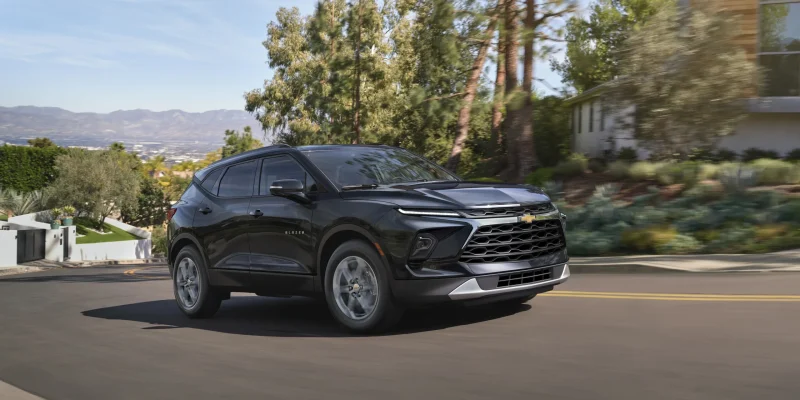
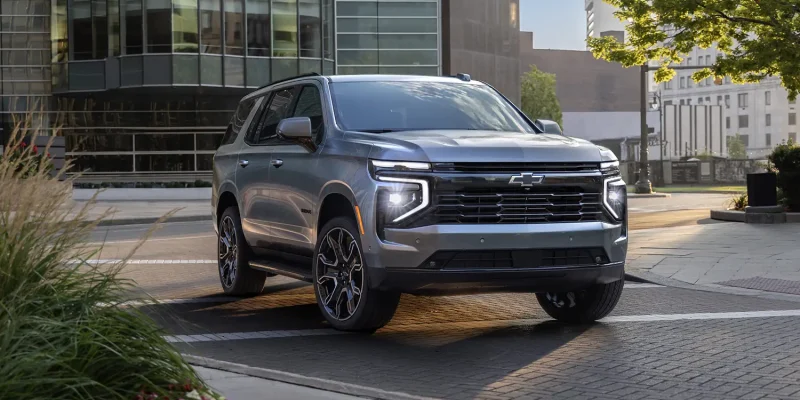
2026 Chevrolet Blazer in black driving on a suburban road with trees, mountains, and modern architecture in the background

2026

Chevrolet

Blazer

The 2026 Chevrolet Blazer review that follows covers everything midsize SUV shoppers need to know before choosing between the 2LT, 3LT, and RS. From engine performance and fuel economy to cargo capacity, interior quality, and invoice pricing, this is the complete picture before you visit a dealership.

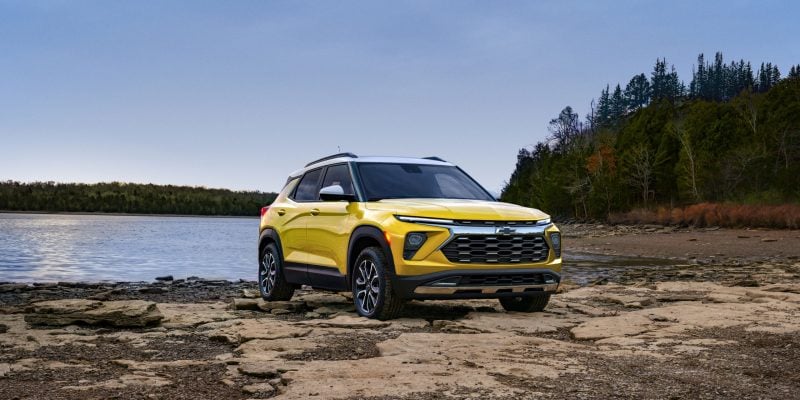
The 2026 Chevrolet Blazer is a two-row midsize SUV that leads with design and backs it up with a capable V-6 engine option and a well-organized cabin. Built around a Camaro-inspired exterior, it stands out visually in a segment where most competitors play it safe. The base 2.0-liter turbocharged four-cylinder handles everyday driving competently, while the available 3.6-liter V-6 adds meaningful performance for buyers who spend time on the highway. For 2026, the lineup has been simplified to three trims: the 2LT, 3LT, and RS, making the buying decision more straightforward than in previous years.

What's New?

The 2026 Chevrolet Blazer arrives with a simplified and more focused lineup. The Redline Edition package and several wheel options have also been removed. The result is a cleaner buying decision with fewer configurations to navigate. Mechanically, the Blazer carries over its proven 2.0-liter turbocharged four-cylinder and 3.6-liter V-6 engines unchanged. The RS remains the performance-oriented top trim, exclusively paired with the V-6 and available with front- or all-wheel drive. No significant changes to the infotainment system, safety technology, or powertrain are expected for the 2026 model year.

Infotainment and Connectivity

  • 10.2-inch tablet for entertainment.
  • The Blazer offers connectivity features such as Bluetooth and WiFi, and it supports both Apple CarPlay and Android Auto.
  • A Bose 8-speaker stereo is available as an option, and a 6-speaker stereo is standard.

Each Blazer has an easy-to-use 10.2-inch tablet that works with both Apple CarPlay and Android Auto. Depending on the trim level, the driver information screen is either 4.2 inches or 8 inches. It has a wireless charging pad, an eight-speaker Bose music system, and built-in guidance.

CHEVROLET BLAZER PRICE AND INVOICE PRICING

The price of the 2026 Chevrolet Blazer could reach $45,000, depending on the trim level and options. We prefer the Blazer 3LT because its optional V-6 engine delivers more power and a louder exhaust note than the turbo four. Blind-spot tracking is also standard on that trim level. As an option, you can still get adaptive cruise control, a 360-degree video system, a Bose eight-speaker stereo, a wireless charging pad, a 120-volt power plug, and built-in navigation.

2026 Chevrolet Blazer Starting Price

The 2026 Chevrolet Blazer starts at $34,300 MSRP. The lineup spans eight configurations across two drivetrains, running from the front-wheel-drive LT with the 2LT package through the all-wheel-drive RS. Front-wheel drive is standard across most configurations, with all-wheel drive available on the LT, Premier, and RS trims. The main pricing decisions come from package selection, drivetrain choice, and whether the step-up to the V-6 engine is worth the added cost given how you plan to use the vehicle.

What Changes the Final Chevrolet Blazer Price?

The LT with the 2LT package is the entry point for buyers who want the Blazer’s design and core technology without premium extras. Moving to the 3LT adds blind-spot monitoring as standard and makes the optional V-6 engine available, which most buyers at this level should seriously consider. The Premier adds leather seating, ventilated front seats, a wireless charging pad, a Bose audio system, and built-in navigation, making it the comfort-focused choice in the lineup. The RS is the performance-oriented top trim, coming exclusively with the 3.6-liter V-6 and sport-tuned suspension, along with 21-inch wheels and a blacked-out exterior appearance package. Beyond trim, the final price can also vary based on destination charges, selected packages, dealer-installed accessories, and local inventory conditions.

How Invoice Pricing Helps Chevrolet Blazer Shoppers

The Blazer’s pricing ladder moves quickly, and the difference between a well-optioned 3LT and a base RS can be smaller than buyers expect on paper but larger at the dealer. Knowing what the dealer paid for the specific trim and configuration you are considering gives you a grounded reference point before any negotiation begins. Invoice pricing gives shoppers a dealer-side cost reference for the exact Blazer configuration they are evaluating, which makes it easier to judge whether the offer on the table reflects real market value. That does not mean every Blazer will sell at invoice price, since local demand, incentives, and dealer fees all affect the final price. For more background, read our guide to What Is Invoice Price and How it Works in 2026.

Where to Check Chevrolet Blazer Invoice Pricing

If you are comparing the LT, Premier, and RS configurations with or without all-wheel drive, our Dealer Invoice Price Lookup Guide explains how shoppers can research invoice pricing before speaking with dealers. You can also visit our Chevrolet page to explore the full lineup, then check invoice pricing for the exact 2026 Chevrolet Blazer trim you are considering.

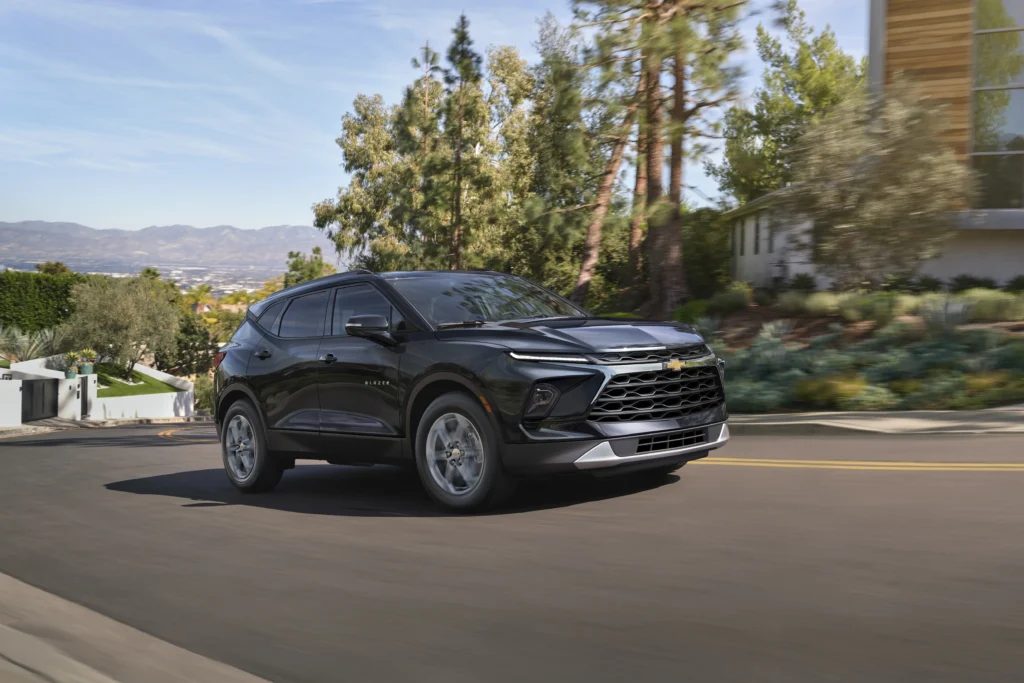
  • The Blazer is powered by a 2.0-liter turbocharged four-cylinder engine generating 228 horsepower.
  • horsepower and a 3.6-liter V-6 with 308 horsepower.
  • Automatic gearbox with nine speeds.

The Blazer 2LT comes standard with a 228-horsepower turbocharged four-cylinder engine and offers a choice between front- and all-wheel-drive configurations. For an extra fee, customers can opt for Chevy’s naturally aspirated 308-hp V-6 engine, which is also standard in the Premier, the top-of-the-line model, and the 3LT, the next model. We think they should. They can also choose the RS trim, which is only offered with the six-cylinder engine. You can get either front-wheel drive or all-wheel drive with either engine, and both use a nine-speed automatic transmission.

The Blazer did very well at the testing sites. It came to a bold stop when we pressed the brakes, reached 60 mph in a reasonable amount of time, and maintained good grip on the skidpad as it went around it. The Blazer is not a performance car, even with the sportiest RS level, which comes with 21-inch wheels, a rough ride, and suspension settings that are right for that level. As a good all-around family SUV, it handles well and rides quietly on smooth roads.

  • In Invoice Pricing’s 60-mph test, the RS AWD model recorded a time of 6.6 seconds.

We tested a car with a V-6 engine, but we haven’t yet attached our testing gear to the regular Blazer’s turbocharged four-cylinder engine. We think that its 6.6-second sprint to 60 mph and equally short rolling-start time will be more than enough for everyone except die-hard fans. Still, it only takes 5.9 seconds for the less powerful Honda Passport to reach 60 mph.

The 2026 Chevrolet Blazer’s fuel economy depends primarily on engine and drivetrain choice. The 2.0-liter turbocharged four-cylinder with front-wheel drive returns 22 mpg city and 29 mpg highway for a combined 25 mpg. Opting for all-wheel drive with the same engine brings the highway figure down to 27 mpg while the city rating holds at 22 mpg.

The 3.6-liter V-6, standard on the RS and available on the 3LT, returns 19 mpg city and 26 mpg highway with front-wheel drive, dropping to 18 city and 25 highway with all-wheel drive. The real-world gap between the four-cylinder and V-6 is meaningful, and buyers who prioritize efficiency should factor that into the engine decision. On our highway fuel-economy route at 75 mph, the V-6 RS AWD returned 24 mpg, consistent with the EPA estimate.

For the class, the four-cylinder figures are competitive. The V-6 trades efficiency for performance and a more engaging exhaust note, and for most buyers, that is a worthwhile trade-off to evaluate at the trim level rather than treat as a given.

Every Chevy Blazer comes standard with driver-assistance features such as automatic high beams, automatic emergency braking, and forward collision warning. The listed price excludes optional extras. 

  • Automatic emergency braking, lane keeping aid, and lane departure warning are all safety features that come as standard.
  • Adaptive cruise control, rear cross-traffic alert, and blind spot tracking are all safety features that can be added as options.

First Row

The Blazer’s button-heavy dashboard and twist-to-control circular air vents have had a significant impact on the Chevy Camaro’s interior design. All models have heated front seats, but the more expensive trims have leather seats, front seats that can breathe, and heated back seats. We found the driver’s seat to be quite uncomfortable and lacking in support.

Second Row

Tall passengers will find ample legroom to stretch out comfortably in the back seat.

Cargo Capacity

The Blazer offers plenty of small-item storage in the front row and can accommodate 11 carry-on bags behind the rear seats. Folding down the rear seats opens up 64 cubic feet of cargo space, which can accommodate up to 26 bags.

Towing

Equipped with standard trailer packages, the V-6 Blazer can tow up to 4,500 pounds, while the four-cylinder version can tow up to 3,250 pounds.

Pros

  • Sporty Camaro-inspired exterior. The Blazer carries design cues from the Camaro throughout its exterior, making it one of the more visually distinctive choices in the midsize SUV segment.
  • V-6 engine delivers real performance. The 308-horsepower 3.6-liter makes a strong case on the highway with confident acceleration and a genuinely engaging exhaust note.
  • Strong cargo capacity. With 64.2 cubic feet of cargo space with the rear seats folded, the Blazer holds its own against class rivals.
  • Generous standard safety technology. Automatic emergency braking, forward collision warning, lane departure warning, lane keeping assist, and blind-spot monitoring are all standard or widely available across the lineup.
  • Intuitive infotainment. The 10.2-inch touchscreen with Apple CarPlay, Android Auto, and wireless charging is easy to use and well-regarded across reviews.

Cons

  • Interior quality does not match the price. At upper trim prices, the abundance of hard plastics throughout the cabin is noticeable and lags behind several class competitors.
  • Driver’s seat comfort is a weak point. The driver’s seat lacks lateral support, which becomes apparent on longer drives or more dynamic roads.
  • V-6 fuel economy is below average for the class. At 18-19 mpg in the city with the V-6, fuel costs add up for buyers who do a lot of urban driving.
  • Does not drive as it looks. The Camaro-inspired styling sets performance expectations that the Blazer, particularly in the RS trim, cannot fully meet on the road, despite its suspension tuning.

The Blazer earns its place in the segment with a design that stands out, a V-6 that delivers when you need it, and a cargo hold that handles real family life. If you have landed on the RS or the 3LT with the V-6 upgrade, knowing what the dealer paid before you sit down changes the conversation. Get the invoice price for the exact 2026 Chevrolet Blazer trim you are considering before you visit a dealership.

Is the Chevrolet Blazer RS worth the premium over the 3LT?

The RS makes sense for a specific type of buyer. It comes standard with the 3.6-liter V-6, 21-inch wheels, sport-tuned suspension, and a blacked-out appearance package that delivers on the Camaro-inspired visual promise. If you want the V-6 and the sportier setup in a single well-equipped package, the RS bundles those choices cleanly. The trade-off is a firmer ride that comes with 21-inch wheels, noticeable on rough roads and around town. If you spend most of your time in urban or suburban environments, the 3LT with the optional V-6 gives you the engine without the harsher suspension. Before committing to either, check the invoice price on both configurations. The gap between the sticker price and the dealer cost on the RS can be wider than buyers expect at this price point.

Select Your Vehicle and See
Secret Dealer Pricing

Takes less than 30 seconds, 100% FREE.

Buying Tips

Buyer negotiating a new car price while reviewing a printed dealer pricing document across the desk from a salesperson at a dealership office.

Negotiating a New Car Price: What To Do Before You Make an Offer

Learn how to prepare before you negotiate a new car, so every offer you make…

Learn More

Auto prices on a dealership window sticker showing MSRP, invoice price, dealer fees, and out-the-door price highlighted in yellow

How to Read Auto Prices Before You Negotiate

Auto prices are never one number. Learn what MSRP, invoice price, and out-the-door price mean…

Learn More

: A car buyer researching how CarsDirect works on a laptop before contacting a dealer.

How Does CarsDirect Work? All You Need to Know

CarsDirect is a solid starting point. Here is what it can and cannot tell you…

Learn More

Car buyer reviewing pricing data on a laptop inside a dealership showroom before negotiating a deal

CarEdge Review: Is the Data Strong Enough to Negotiate?

CarEdge review: solid pricing tool, but here’s what you still need to verify before signing…

Learn More

A car buyer researching how TrueCar works on a laptop, with car keys and notes on the desk

How Does TrueCar Work? How to Use It and What to Look Beyond

How does TrueCar work — and is it enough? Learn what it shows, what it…

Learn More

Woman standing beside a new SUV outside a dealership with an Invoice Pricing lookup screen in the background.

Costco Auto Program vs Invoice Pricing for 2026

Compare Costco Auto Program and Invoice Pricing to choose the best way to buy your…

Learn More

Popular Car Reviews

Content