Do not buy a label
Identify what the vehicle actually is
Dealership language can describe several histories. The paperwork, manufacturer record, title record, odometer, and actual use matter more than the advertising label.
Test-drive or staff-use vehicle
Ask who used it, for what purpose, over what period, and whether it was registered, titled, placed in service, or reported to the manufacturer.
Temporary customer transportation
Ask how many months and miles it served, whether different customers drove it, what maintenance schedule applied, and how damage was documented.
Manufacturer or company use
Ask who owned or operated it, whether it was previously titled, and whether it is being sold under new, used, certified, or special program terms.
Employee-assigned unit
Ask about take-home use, mileage pattern, passengers, smoking or pets, maintenance custody, accidents, cosmetic repairs, and personal-use registration.
Mileage without a prior retail title
Do not assume untitled means unused or full warranty. Verify the in-service and warranty records directly for the VIN.
Used-vehicle transaction
Confirm title history, Buyers Guide treatment where applicable, warranty or certified coverage, financing classification, and eligibility for new-vehicle programs.
Get status in writing
Ask whether the vehicle has ever been titled, registered, reported sold, placed in service, used commercially, used as a rental or loaner, damaged, repaired, or subject to an insurance claim. If the answers are material to your decision, add them to the signed paperwork.
Time and miles can already be running
Warranty and coverage verification worksheet
Manufacturer treatment varies. A warranty may begin on the retail-sale date or an earlier in-service date depending on the brand, program, and vehicle history. Verify the VIN with an authorized source rather than assuming.
VIN-specific coverage record
Compare remaining coverage, not original coverage
If an equivalent new vehicle includes 36 months of basic coverage but the demo has already used six months, price the six-month difference along with the mileage and condition. Do the same for maintenance, roadside, and other time-limited benefits.
Used enough to inspect closely
Demo and loaner condition checklist
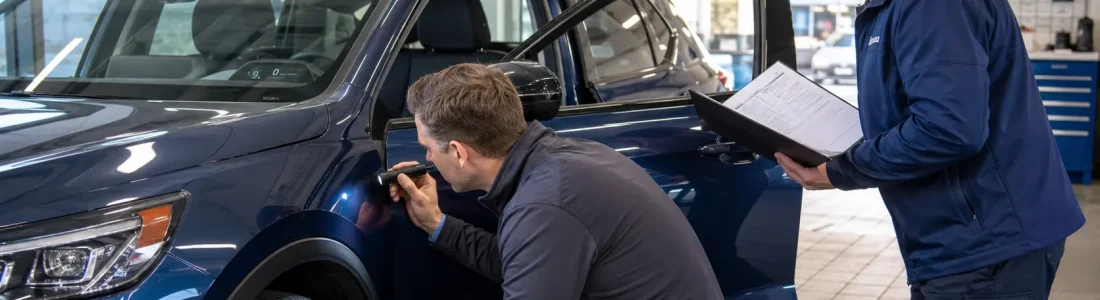
Inspect in clean, dry daylight before signing. A vehicle can be mechanically sound and still have value-affecting wear that an ordinary new-car walkaround would not expect.
| Inspection area | What to verify | Finding / promised remedy |
|---|---|---|
| Exterior panels and paint | Dents, scratches, chips, mismatched paint, overspray, panel gaps | ________________________ |
| Bumpers and lower trim | Parking damage, curb contact, scrapes, loose fasteners | ________________________ |
| Glass and lighting | Chips, cracks, haze, moisture, lamp operation | ________________________ |
| Wheels and tires | Curb rash, matching tires, tread depth, age, pressure, spare or kit | ________________________ |
| Brakes and steering | Noise, vibration, pull, warning lights, disclosed service | ________________________ |
| Interior surfaces | Stains, odors, burns, tears, scratches, headliner and cargo wear | ________________________ |
| Seats and controls | Adjustment, heating, ventilation, memory, switches, ports | ________________________ |
| Infotainment and accounts | Reset profiles, paired phones, navigation history, app ownership | ________________________ |
| Keys and equipment | Every key, remote, manuals, mats, cargo pieces, charging cable | ________________________ |
| Undercarriage / charging | Impact evidence, leaks, corrosion, connector condition, cable | ________________________ |
| Road test | Cold start, ride, noise, acceleration, driver aids, camera, HVAC | ________________________ |
| Independent inspection | Completed, declined, or dealer response documented | ________________________ |
Use the full new car test-drive checklist and do not let the vehicle’s dealership ownership substitute for your own evaluation.
Value the compromises
Demo or loaner discount worksheet
Begin with the best current deal on a truly equivalent unused vehicle. Then adjust for mileage, coverage used, condition, title status, incentive eligibility, financing, maintenance, and equipment differences.
| Value comparison | Equivalent unused vehicle | Demo / loaner vehicle | Demo adjustment |
|---|---|---|---|
| VIN / exact configuration | ________________ | ________________ | Match equipment |
| MSRP | $ ______________ | $ ______________ | $ __________ |
| Negotiated selling price | $ ______________ | $ ______________ | $ __________ |
| Eligible incentives | $ ______________ | $ ______________ | $ __________ |
| Dealer add-ons | $ ______________ | $ ______________ | $ __________ |
| Current mileage | ________ miles | ________ miles | $ __________ |
| Basic warranty remaining | ________________ | ________________ | $ __________ |
| Maintenance / benefits remaining | ________________ | ________________ | $ __________ |
| Title / registration status | New / untitled | ________________ | $ __________ |
| Known wear or repair | None expected | ________________ | $ __________ |
| Tire / brake life difference | New baseline | ________________ | $ __________ |
| Financing / program difference | ________________ | ________________ | $ __________ |
| Itemized OTD price | $ ______________ | $ ______________ | $ __________ |
| Net demo savings | N/A | Unused OTD minus demo OTD | $ __________ |
A discount must survive the OTD comparison
A lower selling price can disappear through unavailable incentives, higher financing cost, dealer-installed products, fees, reduced warranty, near-term tires, or repairs. Compare the complete transaction and remaining benefits.
Before signing
The final buy-or-walk checklist
A strong demo deal has a traceable history, verified coverage, acceptable condition, a meaningful net discount, and written remedies for anything unfinished.
1. Verify the vehicle classification
Confirm how the vehicle will be titled and sold, which disclosures apply, and whether financing and incentives treat it as new, used, certified, demonstrator, or program inventory.
2. Confirm warranty directly
Use the VIN to verify in-service date, coverage start, remaining time and mileage, exclusions, maintenance benefits, and any supplemental dealer or certified coverage.
3. Review history and service
Request maintenance, repair, recall, damage, bodywork, insurance, and usage records available for the vehicle. Explain gaps rather than assuming no record means no event.
4. Inspect and road-test
Complete the condition table, photograph findings, and consider an independent inspection, especially when prior use or repairs are unclear.
5. Compare one complete OTD deal
Use the OTD price guide to compare the demo with a matched unused vehicle after incentives, fees, products, financing, and taxes.
6. Document every promised correction
List repair, replacement, detailing, missing equipment, software, keys, tires, or cosmetic work on a signed due-bill with a deadline.
7. Inspect again at delivery
Do not assume promised work was completed. Recheck the VIN, condition, equipment, documents, and due-bill using the delivery checklist.
Decision record
Common questions
Dealer demo and service-loaner FAQs
Is a dealer demo car considered new or used?
Classification depends on title, registration, prior sale, state rules, manufacturer program, and transaction facts. Ask how the exact VIN will be titled, disclosed, financed, and warranted.
When does the warranty start on a demo or service loaner?
Manufacturer and program treatment varies. The warranty may begin at retail sale or an earlier in-service event. Verify the VIN-specific start date and remaining time and mileage in writing.
How much discount should a demo car have?
There is no universal percentage. Compare the itemized OTD price with an equivalent unused vehicle, then value mileage, wear, warranty used, title status, incentives, financing, maintenance, and repairs.
Can a demo car qualify for new-car incentives?
Eligibility varies by program, VIN status, registration history, transaction date, lender, and buyer qualifications. Request the applicable program terms and confirmation for the exact vehicle.
Should I get a demo or loaner inspected?
Yes, especially when mileage, multiple-driver use, damage, repair, or maintenance history is unclear. Ask whether an independent inspection is permitted before purchase.
Does a service loaner have more wear than its mileage suggests?
It can. Multiple short trips, different drivers, parking, cargo, idling, and repeated entry can create wear patterns that mileage alone does not capture. Inspect the actual vehicle.
Will a demo or loaner have lower resale value?
Future value depends on title history, mileage, condition, accident history, warranty, demand, and how the vehicle is represented at resale. Use a conservative estimate in the ownership-cost comparison.