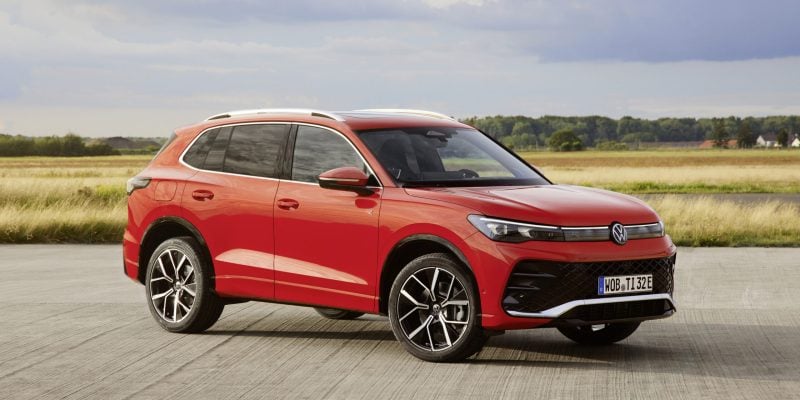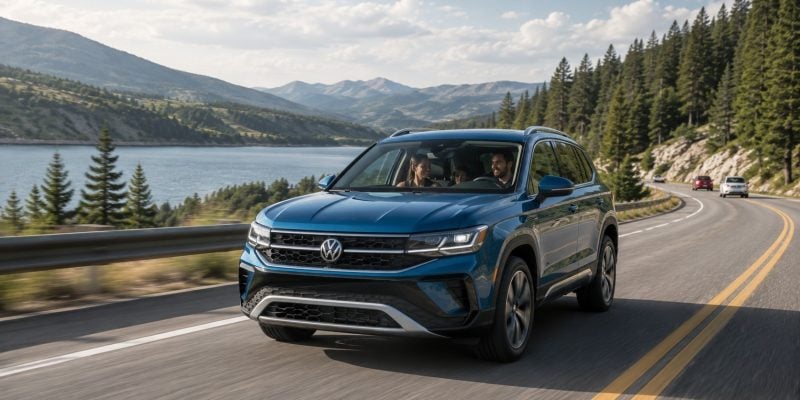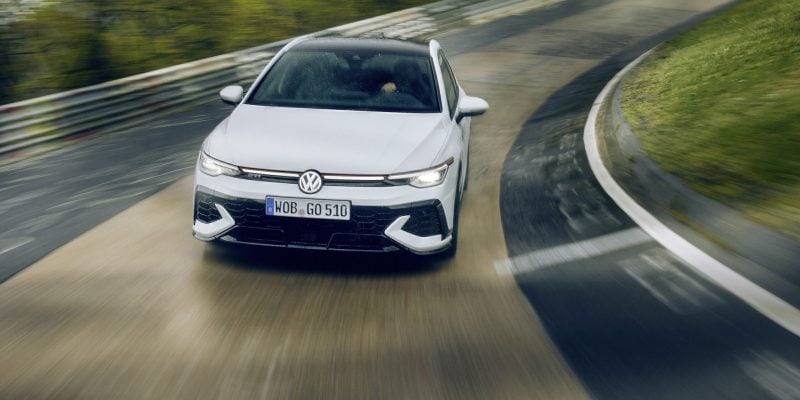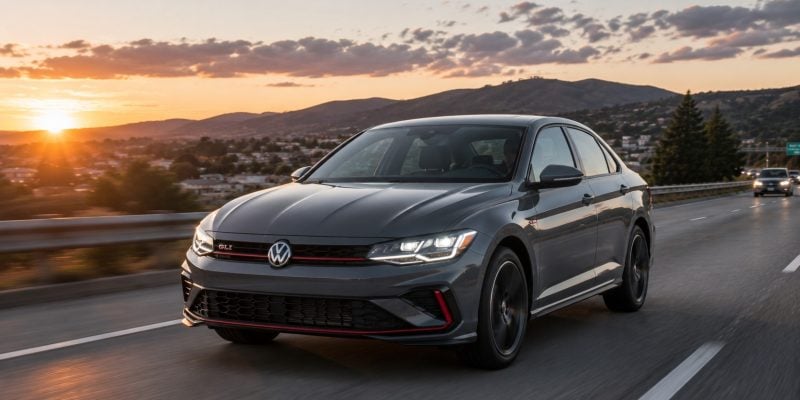
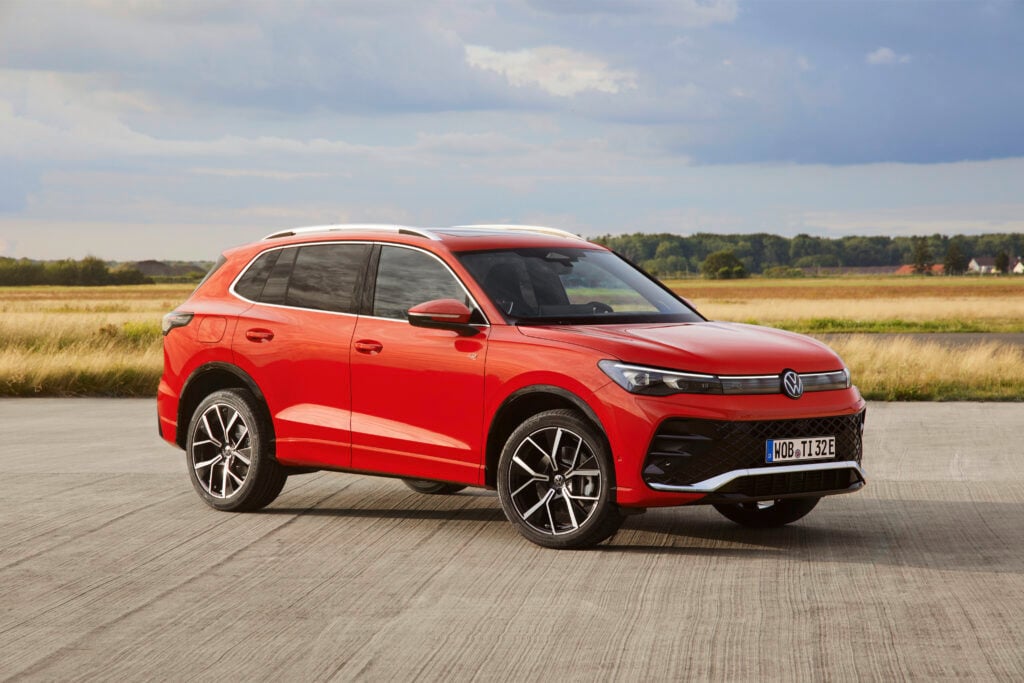
The 2026 Volkswagen Tiguan holds onto the redesigned shape it introduced for the 2025 model year, and this Volkswagen Tiguan Review breaks down what actually changed for the new model year, starting with a stronger top trim. Volkswagen resisted the urge to redesign the Tiguan again so soon, choosing instead to sharpen what already worked, including exterior details, cabin materials, and a bigger emphasis on standard driver assistance tech. The result is a compact SUV that feels more finished than new, which is exactly the point in a segment where buyers reward consistency over constant change.
Four trims carry the 2026 lineup: S, SE, SE R-Line Black, and the newly introduced SEL R-Line Turbo. Every trim below the top spec uses a 201 horsepower turbocharged 2.0 liter four cylinder engine paired with an eight speed automatic transmission, while the SEL R-Line Turbo steps up to a 268 horsepower version of that same engine and adds 4Motion all wheel drive as standard equipment. Front wheel drive remains standard on the three lower trims, with 4Motion available for $1,500 more.
Pricing starts at $30,245 for the base S trim, and climbs well beyond that once buyers option into the SEL R-Line Turbo. That range puts the Tiguan squarely against the Honda CR-V, Toyota RAV4, and Mazda CX-50, and this review covers what changed for 2026, how the cabin technology holds up, where the Tiguan earns its keep on cargo and towing, and what shoppers should know about invoice pricing before they negotiate.