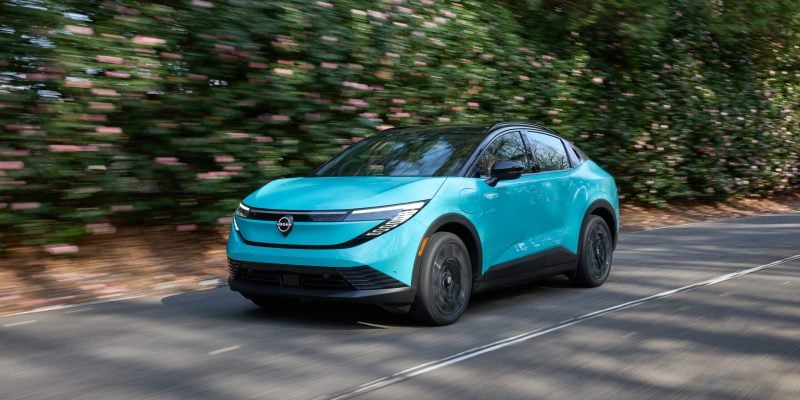
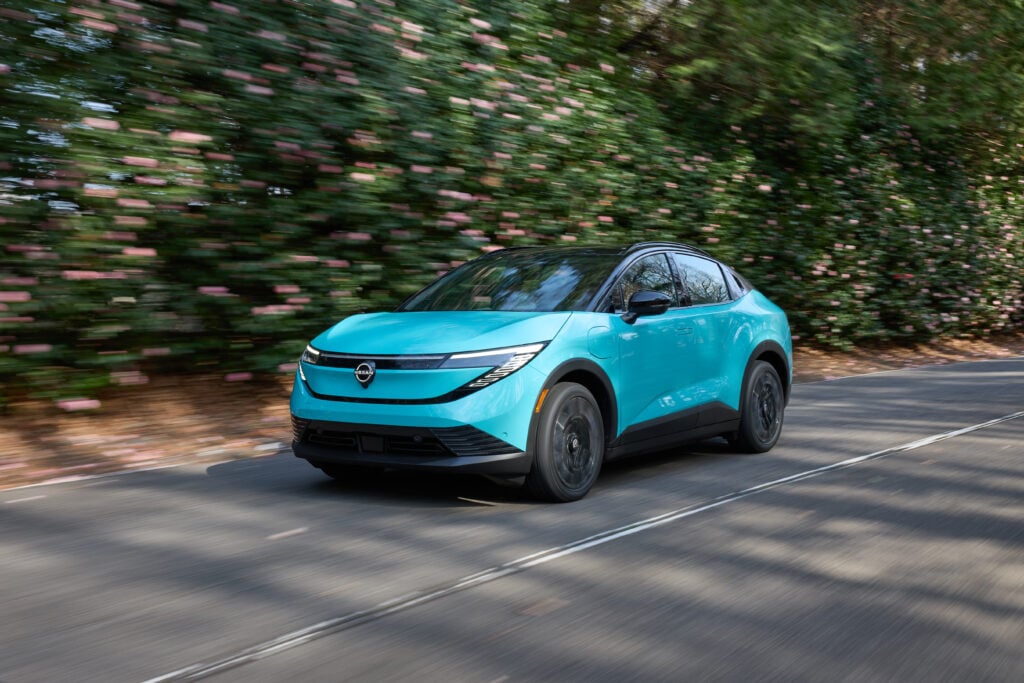
This Nissan Leaf review covers a fundamentally different vehicle for 2026, one that enters its third generation by trading the boxy hatchback shape that defined its first fifteen years for a sleek crossover-coupe body built on Nissan’s newest EV architecture. Every Leaf now rides on a single front-wheel-drive motor producing 214 horsepower, a meaningful jump from the outgoing car, paired with a 75 kWh battery that finally delivers real long-distance usability.
Three trims carry the 2026 Leaf lineup: S+, SV+, and Platinum+, each front-wheel drive and each built around the same motor and battery, with the differences concentrated in range, screen size, seating material, and driver assistance hardware. Depending on trim, EPA-estimated range spans from 259 to 303 miles, and every version now supports both CCS and Tesla-style NACS fast charging without an adapter, along with a peak charging speed that can take the battery from a low state to 80 percent in about 35 minutes.
This Nissan Leaf review walks through what’s new for the redesigned model, the cabin technology and Google-based infotainment now standard across the range, motor and performance characteristics, real-world range and charging economy, standard safety equipment, cargo capacity, and how invoice pricing applies to a Leaf purchase before closing with a rated verdict and a buyer-focused FAQ.