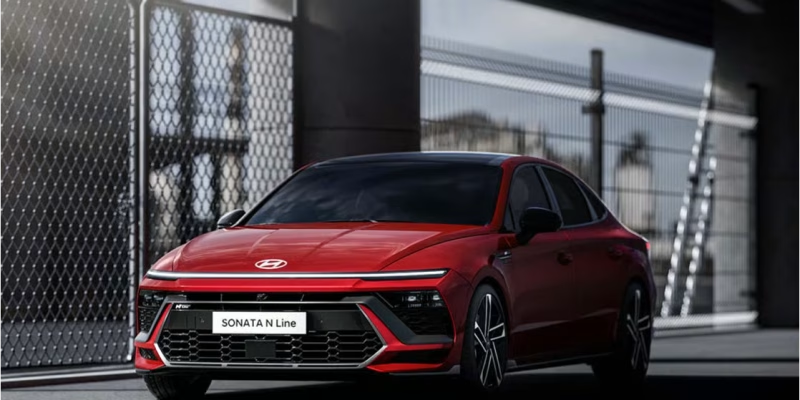
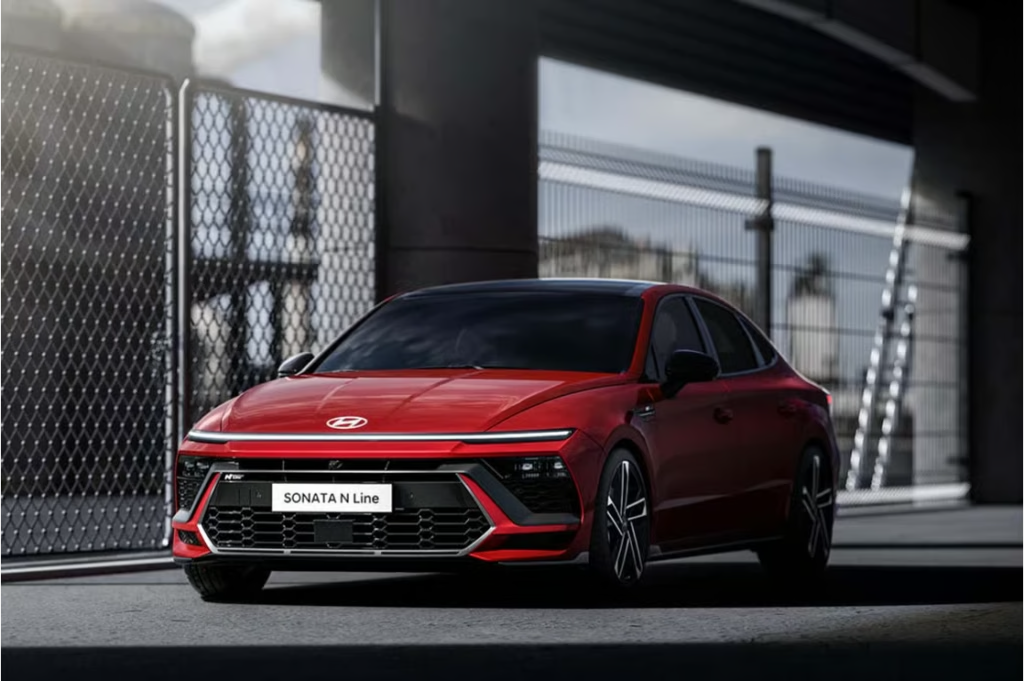
The Hyundai Sonata Review 2026 covers one of the most versatile midsize sedans on the market, a car that genuinely refuses to pick a lane. Starting with the base SE and stretching to a 290-horsepower turbocharged N Line, with AWD available on the SEL Sport and hybrid trims that post up to 51 mpg combined, the Sonata spans more of the buyer spectrum than most rivals dare to attempt. It earns IIHS Top Safety Pick+ honors and a five-star NHTSA rating, all backed by Hyundai’s ten-year, 100,000-mile powertrain warranty. This review covers the full 2026 gas-powered Sonata lineup.
The 2026 Sonata arrives in three gas configurations. The SE and SEL Sport share a naturally aspirated 2.5-liter four-cylinder producing 191 horsepower and 181 pound-feet of torque, paired with an eight-speed automatic. The N Line upgrades to a turbocharged version of that same engine, raising output to 290 horsepower and 311 pound-feet, and swaps the conventional automatic for a dual-clutch transmission with paddle shifters. AWD is offered exclusively on the SEL Sport trim at an additional cost, making it the only Sonata configuration that adds all-weather traction to the standard powertrain.
What separates the Sonata from rivals such as the Honda Accord, Toyota Camry, and Nissan Altima is the breadth of its lineup without a corresponding jump in price. A buyer can start with a practical, efficient base model, step up to a turbocharged performance sedan, or add AWD for winter driving, all within the same nameplate. Backed by Hyundai’s class-leading warranty and earning top marks from both major safety organizations, the 2026 Sonata remains one of the most complete value propositions in the midsize sedan segment.