Hyundai Santa Cruz Review 2026: Amazing for the Whole Family

from the experts at Invoice Pricing

Cars Hyundai Hyundai Santa Cruz Review 2026: Amazing for the Whole Family
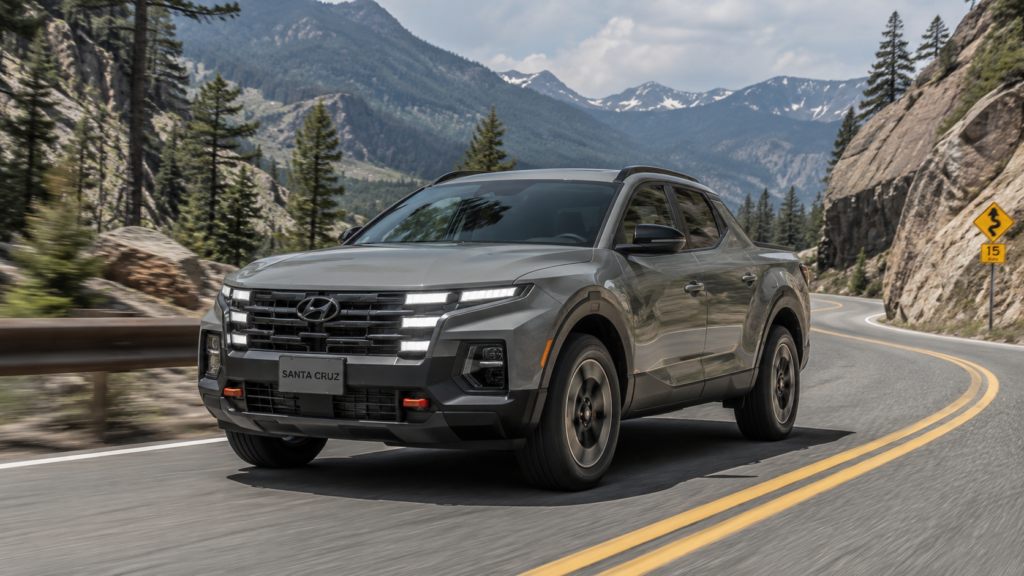
2026 Hyundai Santa Cruz XRT AWD in a rugged outdoor setting showing its compact pickup truck design and bold exterior styling

2026

Hyundai

Santa Cruz

The 2026 Hyundai Santa Cruz Review covers one of the most genuinely useful compact pickups on the market today. This is a truck that delivers real SUV comfort without giving up the cargo bed, the towing capacity, or the driving feel that truck buyers expect. Starting at $29,750, the Santa Cruz arrives in five trim levels ranging from the everyday SE to the performance-tuned Limited, with two distinct powertrains that serve very different kinds of buyers. Whether you need a nimble city hauler or a tow-ready weekend workhorse, there is a Santa Cruz configuration built for you.

What makes the Santa Cruz stand out is the way it thinks about space. The 4.3-foot composite-lined bed handles the kind of everyday cargo most truck buyers actually carry, and the available in-bed locking trunk adds a layer of security and storage that traditional pickups simply cannot match. Pair that with a four-door crew cab configuration that prioritizes front-row comfort and a rear seat that handles four adults on shorter trips, and the result is a vehicle that works harder than it looks.

For 2026, the biggest mechanical news is the replacement of the dual-clutch transmission on turbocharged models with a conventional eight-speed torque-converter automatic, a change that meaningfully improves drivability in stop-and-go conditions and on inclines. The turbo-equipped XRT and Limited trims now feel smoother and more composed at low speeds, which makes them better daily drivers without sacrificing any of the 281-horsepower punch that makes them genuinely fun to push. This review covers everything you need to know before heading to the dealer.


What's New

The most significant update to the 2026 Hyundai Santa Cruz is under the hood, specifically in how power reaches the wheels on the turbocharged XRT and Limited trims. Hyundai has replaced the previous dual-clutch automatic transmission on those models with a conventional eight-speed torque-converter automatic. The change eliminates the hesitation and jerkiness that dual-clutch units can exhibit at low speeds and in slow-moving traffic, making the turbo Santa Cruz noticeably more composed and predictable in daily driving while preserving the full 281 horsepower and 311 lb-ft of torque the engine produces. The gearing ratios carry over from the previous setup, so performance character remains strong. On the interior side, the 2026 model year removes the dark green color option from the available palette, narrowing the cabin color choices to black and medium gray. Aside from these updates, the Santa Cruz carries forward the refreshed styling introduced in 2025, which brought a new grille, updated lighting elements, and revised infotainment software, so buyers get a current-looking, refined package without a full redesign year.

Infotainment and Connectivity

Every 2026 Hyundai Santa Cruz comes standard with a 12.3-inch touchscreen that is well-positioned and intuitively organized, making it one of the easier systems to use while driving. The display responds quickly, menus are logically structured, and the most common functions stay accessible without burying them in sub-menus. Wireless Apple CarPlay and wireless Android Auto are standard across the entire lineup, eliminating the need for cables even on the entry-level SE trim. A 4.2-inch driver information display sits in the gauge cluster on lower trims, with a fully digital instrument panel available on upper trims for a more premium look. Bluetooth connectivity, satellite radio, and HD Radio round out the base tech package. The SEL Activity and higher trims add a wireless smartphone charger, making the center console a genuinely functional landing zone. Audio quality starts with a six-speaker system on the SE and improves on upper trims with an available Bose premium audio setup. Over-the-air software updates keep the infotainment system current without requiring dealer visits, and Hyundai’s Bluelink connected services provide remote start, vehicle status monitoring, and navigation support from a smartphone app.

Hyundai Santa Cruz Price and Invoice Pricing

2026 Hyundai Santa Cruz Starting Price

The 2026 Hyundai Santa Cruz starts at $29,750 for the SE trim with front-wheel drive and the naturally aspirated 2.5-liter engine. That entry price positions the Santa Cruz as one of the more accessible compact pickups on the market while still including a generous standard feature set. The price range across the full lineup spans from the SE through the top-tier Limited, which is equipped with the turbocharged engine, standard all-wheel drive, and premium interior materials. Understanding where the Santa Cruz sits relative to its dealer cost is the key to getting a fair deal, and that starts with knowing what the dealer-side cost looks like before markup.

What Changes the Final Hyundai Santa Cruz Price?

The trim level is the primary driver of Santa Cruz pricing, and each step up the ladder adds meaningful equipment. The SE provides the essentials at the lowest price. The SEL adds comfort and convenience features including synthetic leather upholstery. The SEL Activity brings utility-focused additions including the bed tonneau cover, cargo rails, and a bed power outlet. The XRT moves to the turbocharged engine with standard AWD and adopts a more aggressive visual package suited for off-road use. The Limited sits at the top with the turbo engine, premium leather, ventilated front seats, a sunroof, and the most complete tech and safety package available. The final price can also vary based on the all-wheel drive option on the three lower trims, any dealer-installed accessories, and regional market conditions.

How Does Invoice Pricing Work for the Santa Cruz?

The sticker price on any Santa Cruz trim is not the price most buyers pay. There is a gap between what the dealer paid for the vehicle and the MSRP shown on the window, and understanding that gap gives you negotiating leverage. Reading What Is Invoice Price and How It Works in 2026 gives you a clear picture of how dealer cost is structured and why it matters when you sit down to negotiate.

Where to Check the Santa Cruz Invoice Price

The most practical step before visiting a dealer is looking up the actual dealer cost for the specific Santa Cruz trim and configuration you want. The Dealer Invoice Price Lookup Guide walks you through how to find that number quickly. You can also explore the full Hyundai page for pricing context across the complete Hyundai lineup.

The 2026 Santa Cruz offers two powertrains that serve meaningfully different buyer needs. The SE, SEL, and SEL Activity trims are powered by a naturally aspirated 2.5-liter four-cylinder engine producing 191 horsepower and 181 lb-ft of torque, paired with an eight-speed automatic transmission. Front-wheel drive is standard on these trims, with all-wheel drive available for an additional $1,500. The base engine provides adequate motivation for everyday driving and light hauling, and its fuel efficiency advantage over the turbo makes it the pragmatic choice for buyers who prioritize economy.

The XRT and Limited trims step up to a turbocharged 2.5-liter four-cylinder rated at 281 horsepower and 311 lb-ft of torque, now paired with the updated eight-speed torque-converter automatic transmission that replaces the previous dual-clutch unit. All-wheel drive is standard on both turbo trims. The turbocharged Santa Cruz reaches 60 mph in approximately 6 seconds, which is quick for a compact pickup and genuinely enjoyable in everyday driving. The suspension is tuned for comfort without being sloppy, and the Santa Cruz handles urban streets and winding roads with more agility than most similarly sized trucks. Four drive modes are available on AWD models, including a Snow setting for northern climates, adding real-world utility to the performance package.

The EPA has rated the 2026 Hyundai Santa Cruz at 22 mpg city and 30 mpg highway, with a 25 mpg combined figure for the naturally aspirated 2.5-liter engine with front-wheel drive. Adding all-wheel drive to the base engine drops those figures slightly to 21 city, 29 highway, and 24 combined. The turbocharged engine with standard all-wheel drive earns EPA ratings of 18 mpg city and 25 mpg highway for a 20 mpg combined figure. Real-world highway driving with the turbo AWD setup has returned results in the low-to-mid 20s for some drivers in mixed use, and independent highway testing at a steady 75 mph with the turbo model recorded 30 mpg, suggesting the EPA combined figure may understate actual highway efficiency. The base engine is the clear winner for buyers who prioritize fuel costs and mostly drive around town or on the highway without heavy loads. The turbo trims extract a fuel economy penalty in exchange for significantly more capability and driving enjoyment, a tradeoff that most buyers who choose those trims are happy to make.

The 2026 Hyundai Santa Cruz comes standard with Hyundai SmartSense across every trim level, which is one of the most comprehensive standard safety suites in the compact truck segment. Every Santa Cruz includes forward collision warning, automatic emergency braking with pedestrian and cyclist detection, a driver attention monitor, lane keeping assist, lane departure warning, automatic high-beam assist, blind spot warning, rear cross-traffic alert, and adaptive cruise control with stop-and-go capability. Highway Driving Assist is also included, providing lane centering and active speed management on the highway to reduce driver fatigue on longer trips. Front and rear parking sensors are standard, giving drivers added confidence in tight spaces. Reverse automatic emergency braking adds a further layer of protection when backing out of driveways or parking areas. The Santa Cruz has earned strong safety recognition from both the Insurance Institute for Highway Safety and the National Highway Traffic Safety Administration, reflecting the quality of the structural design and the effectiveness of the standard driver assistance systems.

The front row of the 2026 Santa Cruz is genuinely comfortable, with well-shaped seats and easy adjustability. The driver’s position provides good sightlines and a familiar SUV-style seating height that makes entry and exit natural. Upper trims add power adjustment, heated and ventilated seats, and memory functions for the driver’s seat. The center console is well laid out with useful storage, a wireless charger on SEL Activity and above, and a wide-mouth pass-through that accommodates larger items. The rear seat offers reasonable legroom for adults on shorter trips, though taller passengers will notice the tighter headroom created by the sloping roofline. The rear doors are full-sized, which makes loading and unloading easier than in many compact trucks.

The 4.3-foot composite-lined pickup bed is the Santa Cruz’s defining feature, delivering approximately 27 cubic feet of open cargo space. The bed includes a composite lining that resists damage and an available retractable hard tonneau cover that provides weather protection and security without requiring manual folding. The SEL Activity trim adds cargo rails with anchor points and a household-style 120-volt power outlet in the bed, making it one of the most functional bed packages in the segment. Below the bed floor, an available in-bed locking trunk provides sealed, lockable storage that keeps valuables out of sight. Towing capacity reaches 3,500 pounds with the naturally aspirated engine in front-wheel-drive configuration and climbs to 5,000 pounds with the turbocharged AWD setup, enough for a small camper, a motorcycle trailer, or a modest boat.

Pros

  • Turbocharged Performance. The 281-horsepower turbo engine on XRT and Limited trims delivers genuinely quick acceleration and confident towing up to 5,000 pounds, all paired with a smoother eight-speed automatic for 2026.
  • SUV-Level Comfort. The Santa Cruz rides more like a well-tuned crossover than a traditional pickup, with a composed suspension, a quiet cabin, and front seats that are supportive on long drives.
  • Standard Safety Technology. Hyundai SmartSense comes standard on every trim, including automatic emergency braking, adaptive cruise control, blind spot warning, and Highway Driving Assist without requiring a higher package.
  • Clever Bed Design. The 4.3-foot composite bed includes an available locking in-bed trunk, a hard retractable tonneau cover, and a 120-volt power outlet on select trims, making it one of the most functional compact beds available.
  • Competitive Starting Price. At $29,750 for the SE, the Santa Cruz offers a strong standard feature set including wireless CarPlay and Android Auto, a 12.3-inch touchscreen, and a full safety suite at a price well below many rivals.

Cons

  • Small Bed for Heavy Haulers. The 4.3-foot bed works well for everyday cargo but limits the Santa Cruz for buyers who regularly need to haul large loads, sheet materials, or oversized equipment.
  • Rear Seat Space Is Limited. Taller adults will find the rear seat tight for headroom and legroom on longer trips, making the Santa Cruz better suited to four adults on short drives rather than extended road trips.
  • Turbo Fuel Economy Is a Trade-off. The turbocharged AWD models return an EPA-rated 20 mpg combined, which lags behind the Maverick hybrid and makes the turbo trims a less compelling choice for primarily city-driven miles.
  • No Hybrid Option. Unlike its primary competition, the Santa Cruz does not offer a hybrid powertrain, which means buyers focused on fuel cost efficiency are left choosing between the base naturally aspirated engine and the thirstier turbo.

The 2026 Hyundai Santa Cruz is the rare compact pickup that does not ask you to compromise. It delivers SUV comfort on the commute and real truck capability on the weekend, wrapped in a design that turns heads without trying too hard. If you are ready to see what the Santa Cruz can do, get your invoice pricing first so you walk into the dealer knowing exactly what a fair deal looks like.

Is the 2026 Hyundai Santa Cruz good for towing?

Yes, the 2026 Hyundai Santa Cruz is a capable tower within the compact pickup segment. Models equipped with the naturally aspirated 2.5-liter engine and front-wheel drive can tow up to 3,500 pounds, which covers smaller trailers, jet skis, and landscaping loads. Stepping up to the turbocharged XRT or Limited trim with standard all-wheel drive raises the towing rating to 5,000 pounds, which is enough for a small camper, a single-axle boat trailer, or a two-place motorcycle trailer. For buyers planning regular towing, the turbo AWD trims are the clear recommendation. Before finalizing your trim choice, it is worth looking up the invoice price on the specific configuration you want so you have a clear picture of what a fair deal looks like at the dealer.

Written by Invoice Pricing

Sources Reviewed

Hyundai USA / EPA / FuelEconomy.gov / IIHS

Disclosure

Invoice-Pricing.com may connect shoppers with participating dealers.

Select Your Vehicle and See
Secret Dealer Pricing

Takes less than 30 seconds, 100% FREE.

Buying Tips

Woman standing beside a new SUV outside a dealership with an Invoice Pricing lookup screen in the background.

Best Alternatives to Costco Auto Program

Learn More

Buyer negotiating a new car price while reviewing a printed dealer pricing document across the desk from a salesperson at a dealership office.

Negotiating a New Car Price: What To Do Before You Make an Offer

Learn how to prepare before you negotiate a new car, so every offer you make…

Learn More

Auto prices on a dealership window sticker showing MSRP, invoice price, dealer fees, and out-the-door price highlighted in yellow

How to Read Auto Prices Before You Negotiate

Auto prices are never one number. Learn what MSRP, invoice price, and out-the-door price mean…

Learn More

: A car buyer researching how CarsDirect works on a laptop before contacting a dealer.

How Does CarsDirect Work? All You Need to Know

CarsDirect is a solid starting point. Here is what it can and cannot tell you…

Learn More

Car buyer reviewing pricing data on a laptop inside a dealership showroom before negotiating a deal

CarEdge Review: Is the Data Strong Enough to Negotiate?

CarEdge review: solid pricing tool, but here’s what you still need to verify before signing…

Learn More

A car buyer researching how TrueCar works on a laptop, with car keys and notes on the desk

How Does TrueCar Work? How to Use It and What to Look Beyond

How does TrueCar work — and is it enough? Learn what it shows, what it…

Learn More

More Hyundai Models

Content